How Do Tariffs Reshape the Aluminum Foil Container Trade?
How Do Tariffs Reshape the Aluminum Foil Container Trade?
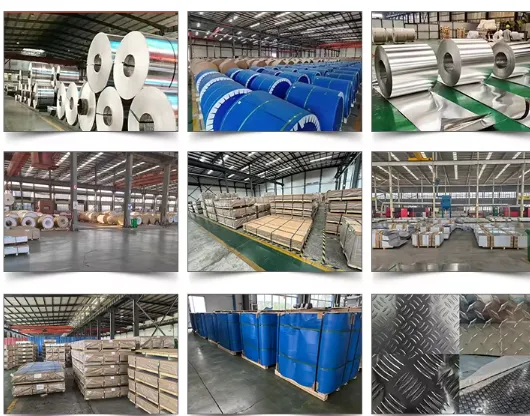
Tariffs are rewriting the rules of global trade in aluminum foil containers. We see it every day at our factory in Henan — buyers from the US, Europe, and Southeast Asia are rethinking supply chains. A 25% tariff on Chinese aluminum products under Section 301, plus anti-dumping duties on foil from certain countries, has pushed costs up by 15-30% for many importers. But here’s the twist: tariffs don’t just raise prices — they force innovation.
Take a typical 500ml round foil container. Pre-tariff, landed cost in the US might have been $0.045/pc. After tariffs, that jumps to $0.056-0.060/pc. That 25% increase squeezes margins for food processors, caterers, and airlines. But smart buyers are adapting. Some shift to thinner gauges (e.g., 0.045mm instead of 0.060mm) without sacrificing strength — our factory’s 8011 alloy handles this well. Others consolidate orders to hit higher volumes and negotiate better freight. Tariffs are accelerating a trend toward value engineering, not just cost-cutting.
Who Pays the Price — Importers or End Users?
Short answer: both. Importers typically absorb the first shock. But in a competitive market like disposable food packaging, margins are thin — often 5-10%. A 25% tariff can’t be fully buried. So prices rise along the chain. A restaurant buying 1000 foil trays per week might see a $15-20 increase monthly — manageable, but not negligible.
However, there’s a nuance. Many importers have switched to suppliers in tariff-exempt categories. For example, aluminum foil containers classified under HS 7615.10 (household articles) may face lower duties than those under 7607 (foil). Our compliance team helps buyers classify correctly — it’s a legal but strategic move. Also, free trade agreements with countries like Vietnam or Mexico offer alternative routes, though capacity is limited. We’ve seen some US buyers open secondary supply lines in Southeast Asia, but quality consistency remains a challenge.
Can Tariffs Accelerate Domestic Production in Importing Countries?
Theoretically, yes. In practice, it’s slow. Setting up a foil container line requires capital — a single automated line costs $1-2 million. Raw material (aluminum coil) is globally priced, so domestic producers don’t have a big input cost advantage. Labor? In the US, a factory worker costs $15-20/hr; in China, it’s $3-5/hr. Even with tariffs, Chinese-made containers often remain cheaper.
But we’re seeing niche shifts. For example, short-run custom printing (e.g., airline meal trays with logos) is moving closer to end markets because of speed. Our factory offers OEM/ODM with 50,000 MOQ, but for urgent orders under 10,000 pieces, local converters might win. That said, for large volumes — say 500,000 baking cups — Chinese factories like ours still dominate due to scale. We run 12 lines, 800M+ pieces annually, so unit costs stay low.
What Are the Hidden Costs Beyond the Tariff Percentage?
Tariffs are just the tip. The real pain comes from uncertainty. A buyer who signs a 6-month contract at $0.05/pc might see tariffs change mid-contract. That risk gets priced in — often as a 5-10% premium. Plus, customs delays: shipments held for documentation review can add 2-4 weeks, forcing buyers to carry extra safety stock. For a food distributor, that means more warehouse space and potential spoilage.
Another hidden cost: mold and tooling. Custom containers require molds costing $500-3000 each. If tariffs shift supply sources, those molds may become stranded. Our factory keeps molds for 5+ years and can transfer them to another facility if needed — a flexibility smaller producers lack. Also, certification costs: FDA, HACCP, and ISO audits cost $10,000-50,000 per site. Switching suppliers means re-certifying. So tariffs don’t just affect price — they lock in relationships.
How Are Buyers Restructuring Their Supply Chains?
We see three strategies. First, dual sourcing: split orders between China and a tariff-free country. For example, 70% from our factory, 30% from a Vietnamese partner. This hedges risk but complicates quality control. Second, pre-buying: stock up before tariff hikes. Some US buyers ordered 6-month supplies in late 2024 to beat expected increases. Third, long-term contracts with price escalation clauses tied to tariff rates — we offer this for orders above 500,000 pieces.
Interestingly, tariffs are pushing buyers toward value-added products. Why pay more for a basic tray when a custom-printed, branded container costs only 10% extra? The added margin helps absorb the tariff. Our custom printing service uses food-grade inks (FDA 21 CFR 176.170) and runs at 200 pieces/minute. So a bakery can turn a commodity tray into a marketing tool — and justify the higher shelf price.
Does Tariff Policy Differ Between Round and Rectangular Containers?
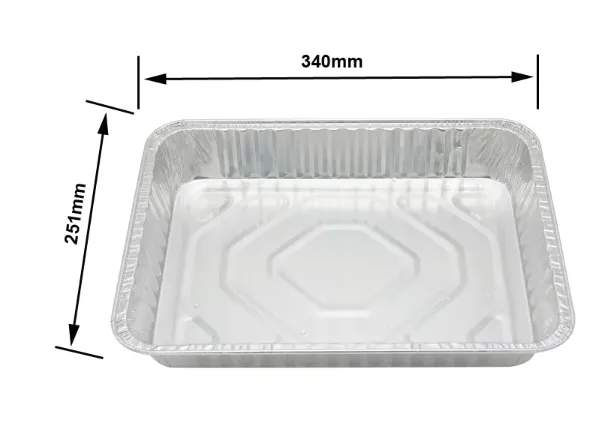
Not directly — HS codes apply to shape-neutral categories. But practical differences exist. Rectangular trays (e.g., 9x13 inch) are more standardized and often face lower per-unit shipping costs because they nest efficiently. Round containers (e.g., 8 oz) are bulkier per piece due to nesting limits. Tariffs hit both equally, but freight costs amplify the impact on round items. A 40-foot container holds about 80,000 round 8-oz containers versus 120,000 rectangular 9x13 trays. So the tariff per piece is effectively 50% higher for rounds due to shipping inefficiency.
We advise buyers to optimize packaging density. For example, using rectangular containers where possible reduces landed cost by 15-20%. Also, consider lids: a foil lid adds weight and volume. Switching to paperboard lids (if compatible) can cut costs. Our factory supplies both foil and plastic lids, allowing mix-and-match. For airline meals, where weight is critical, we’ve helped clients reduce container gauge from 0.060mm to 0.050mm, saving 17% in aluminum cost — enough to offset a tariff increase.
| Container Type | Typical Gauge (mm) | Pieces per 40' Container | Landed Cost per Piece (pre-tariff) | Landed Cost per Piece (with 25% tariff) |
|---|---|---|---|---|
| Round 8 oz (without lid) | 0.050 | 80,000 | $0.038 | $0.048 |
| Rectangular 9x13 (without lid) | 0.060 | 120,000 | $0.045 | $0.056 |
| Baking cup (2.5 oz) | 0.040 | 200,000 | $0.015 | $0.019 |
| Airline meal tray (with lid) | 0.070 | 60,000 | $0.080 | $0.100 |
Are Tariffs Driving Innovation in Foil Container Design?
Absolutely. Necessity breeds creativity. We’ve developed containers with reinforced rims that allow gauge reduction from 0.060mm to 0.045mm without buckling. That saves 25% in material cost. Also, we’re using alloy 8011 which is stronger than 3003 at the same gauge, so thinner walls work. Some buyers are switching to “one-size-fits-all” containers with adjustable lids to reduce SKU complexity.
Another trend: reusable foil containers. A thick-gauge (0.100mm) tray can withstand 10-20 uses in a commercial kitchen. While not cheap upfront ($0.20/pc), the cost per use drops to $0.01-0.02 — beating single-use plastics on both price and sustainability. Tariffs make this math even more attractive because the per-use cost is less affected by tariff spikes. We’ve produced prototypes for hotel chains and catering companies.
What Should Buyers Do Now to Prepare for Future Tariff Changes?
First, audit your current container spend. Break down material cost, tariff, freight, and duties. You might find that a 10% tariff increase is less painful than a 5% freight hike. Second, diversify but don’t overcomplicate. Having three suppliers in three countries sounds smart but each requires qualification. We recommend one primary (China) and one backup (e.g., Turkey or India). Third, lock in prices with index-based contracts. Our factory offers quarterly pricing tied to LME aluminum prices — this gives buyers predictability.
Finally, consider free samples. We provide free samples to qualified buyers — you can test our containers for strength, fit, and print quality before committing. A sample can reveal if a thinner gauge works for your application. Tariffs are a fact of life, but with the right partner, they become manageable. Our 2007-founded factory has weathered multiple trade wars — we know how to adapt.
Can I get a tariff exemption for food-grade containers?
Possibly. Under certain Section 301 exclusions, products used in food packaging have been exempted in the past. Check the latest HTSUS rulings. Our compliance team can help you file for exclusions if you’re a US importer. Also, containers made from 100% recycled aluminum may qualify for lower duties under some trade agreements.
How long does it take to develop a custom mold for a new container?
Typically 15-25 days from design approval to first samples. We have in-house mold making with 5-axis CNC machines. For rush orders, we can deliver in 10 days. After mold approval, production takes 20-30 days for a 50,000-piece MOQ.
What certifications do your containers have for food contact?
All our containers comply with FDA 21 CFR 176.170 (indirect food additives) and EU Regulation 1935/2004. We also hold HACCP, ISO 9001, ISO 14001, and ISO 50001. For biodegradable claims, we use EN13432 and ASTM D6400 for our coated paper lids.
Looking for aluminum foil containers?
We supply food-grade aluminum foil containers for airlines, restaurants and food processors worldwide. Get a free quote today.
Get Free Quote → Browse Products