How Recycling Infrastructure Shapes Foil Packaging Policy
How Recycling Infrastructure Shapes Foil Packaging Policy
Walk into any packaging trade show today, and you’ll hear the same buzzwords: circular economy, recyclability, extended producer responsibility. But what do they actually mean for a buyer of food-grade aluminum foil containers? The answer lies not in the foil itself, but in the recycling infrastructure that handles it after use. Aluminum is infinitely recyclable—that’s a fact. Yet the policies driving packaging decisions are increasingly shaped by how well local recycling systems can actually capture and process that material. For B2B buyers, understanding this link is critical to making cost-effective, compliant choices.
Why Aluminum Foil Packaging Gets a Bad Rap (Unfairly)
Here’s a common misconception: aluminum foil containers are not recyclable because they’re contaminated with food. In reality, food-grade aluminum can be recycled with minimal loss—provided the recycling stream accepts it. The problem is infrastructure. Many municipal recycling programs still reject foil trays because sorting equipment can’t distinguish them from other thin metals, or because residual grease complicates processing. But this is changing. Modern eddy-current separators and optical sorters can handle aluminum foil efficiently. Policy is following suit: the EU’s Packaging and Packaging Waste Regulation (PPWR) now mandates that all packaging must be recyclable at scale by 2030, and aluminum foil is explicitly included. For manufacturers like our factory—with 12 automated lines producing 800M+ pieces annually—this means investing in designs that pass sorting tests, like clean edges and minimal coatings.
The Policy Feedback Loop: Infrastructure Drives Regulation
Recycling infrastructure isn’t static. When a city upgrades its MRF (Materials Recovery Facility), suddenly materials that were previously “non-recyclable” become acceptable. Policy often follows these upgrades. For example, the UK’s Plastic Packaging Tax exempts aluminum foil because it’s already widely recycled—but only in areas with proper collection. Conversely, regions with poor infrastructure sometimes ban certain foil products altogether. This creates a patchwork that B2B buyers must navigate. Our advice: always check the specific recycling rates for aluminum in your target market. In Germany, over 90% of aluminum packaging is recycled; in the US, it’s around 55%. That difference directly affects whether a local policy will incentivize or penalize foil use.
Case Study: Airline Meal Containers
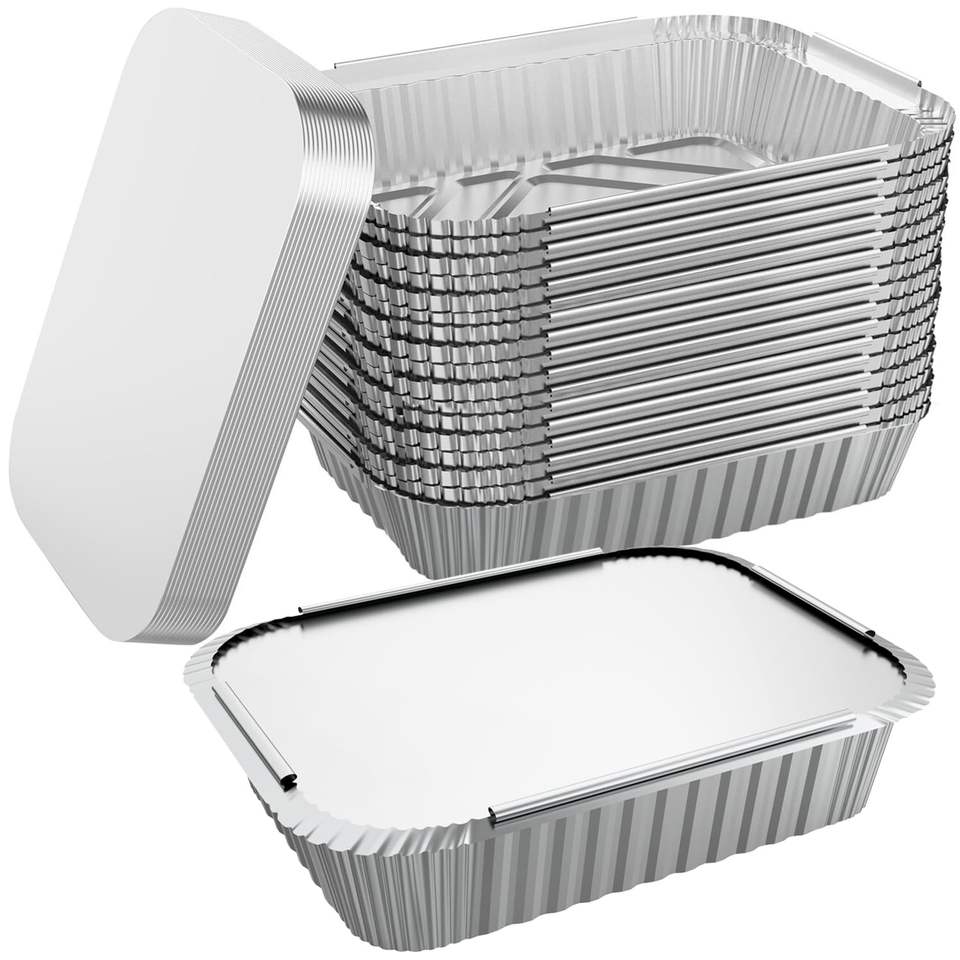
Consider airline meal containers. Airlines operate globally, so they need a container that works across multiple jurisdictions. A standard 200ml rectangular foil tray with a paperboard lid (like our model FCT-200R) is recyclable in most EU countries because the foil can be separated from the paper easily. But in Japan, where incineration is common, the same tray might be burned for energy recovery rather than recycled. Policy in Japan doesn’t penalize foil, but it also doesn’t reward it. The key takeaway: choose a container that aligns with the dominant waste management method in your end market.
How Our Factory Adapts to Policy Trends
At Foil Container Factory, we’ve been manufacturing since 2007, and we’ve seen policy shifts come and go. What stays constant is the need for flexibility. Our 20,000 sqm facility in Henan, China, produces over 800 million pieces per year using food-grade alloy 8011/3003. We hold certifications like FDA 21 CFR 176.170, HACCP, GMP, ISO 9001, ISO 14001, and ISO 50001. These aren’t just badges—they’re proof that our materials meet the strictest food contact standards and environmental management requirements. When a new policy emerges, we can pivot quickly. For instance, when California proposed a bill requiring minimum recycled content in aluminum packaging, we sourced recycled-content foil from our suppliers to help customers comply.
Practical Tips for B2B Buyers Navigating Foil Packaging Policy
Know your end market’s recycling rate. A container that’s recyclable in theory means nothing if local MRFs can’t process it. Check with the local waste authority or use tools like Recycle Across America’s label database.
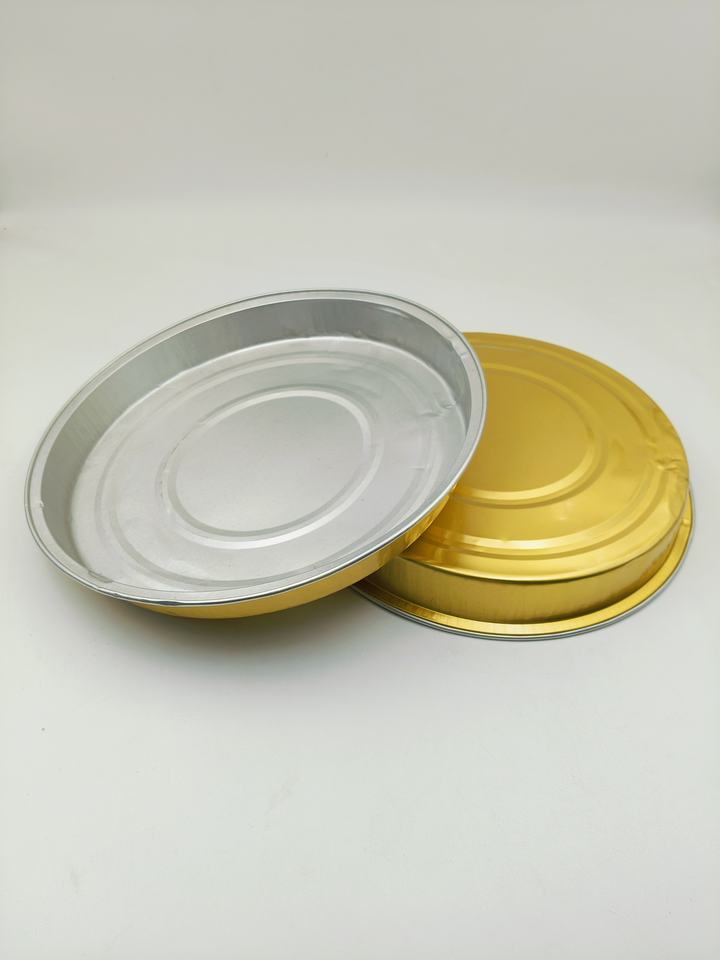
Choose standard sizes. Custom molds are great for branding, but standard round and rectangular trays (like our 8-inch round or 1-lb loaf pan) are more likely to be accepted by sorting equipment. Non-standard shapes can jam sorters.
Opt for minimal coatings. Foil containers with plastic or silicone coatings may be rejected by recyclers. Stick to bare aluminum or use paperboard lids that are easily separable.
Request a recyclability assessment. Many testing labs (e.g., PTI, APR) can evaluate your packaging against local criteria. We provide free samples for qualified buyers so you can test before committing.
Plan for extended producer responsibility (EPR). EPR fees are calculated based on material weight and recyclability. Aluminum foil is lightweight and highly recyclable, so it often incurs lower fees than multi-material alternatives.
Comparing Foil to Alternatives: A Reality Check
Let’s look at the numbers. Below is a comparison of common food container materials across key metrics relevant to policy and infrastructure.
| Material | Recyclability Rate (US avg) | Cost per 1,000 units (500ml) | Weight per unit | Carbon footprint (kg CO2e/kg) |
|---|---|---|---|---|
| Aluminum foil (0.045mm) | 55% | $45-65 | 6g | 7.5 |
| CPET (crystallized PET) | 29% | $80-120 | 12g | 4.2 |
| PLA (compostable) | N/A (industrial compost) | $90-140 | 10g | 3.8 |
| Paperboard (with PE lining) | 20-40% | $35-60 | 8g | 2.1 |
Aluminum foil has a higher carbon footprint per kilogram than plastic or paper, but its light weight and high recyclability can offset that in a full life-cycle analysis. More importantly, recycling infrastructure for aluminum is mature and widespread—unlike compostable plastics, which require specialized facilities that are rare. Policy tends to favor materials that are actually recycled at scale, not just theoretically recyclable.
Common Misconceptions About Foil Recycling
Myth: “Aluminum foil is not recyclable because it’s too thin.” Actually, thickness doesn’t matter for recycling. The issue is contamination and sorting. Our foil containers are made from alloy 8011, which melts down just as efficiently as beverage cans. Many MRFs now have dedicated lines for foil.
Myth: “Foil containers with food residue are unrecyclable.” A quick rinse is all it takes. Most recycling guidelines recommend rinsing any container before disposal. The real problem is when containers are used for greasy foods and not cleaned—but that’s a consumer behavior issue, not a material flaw.
Myth: “Compostable containers are always better for the environment.” Not if they end up in a landfill or incinerator, which is the fate of most compostable packaging today. Aluminum, on the other hand, has a robust secondary market. The value of recycled aluminum covers the cost of collection and sorting, making it economically sustainable.
FAQ: Recycling Infrastructure and Foil Policy
Does my foil container need to be certified recyclable?
Not always, but it helps. Certifications like the How2Recycle label or the Aluminum Association’s “Infinitely Recyclable” mark can reassure buyers and regulators. For custom packaging, we can provide documentation that our foil meets FDA and EU food contact standards, which often aligns with recyclability criteria.
How can I ensure my foil packaging complies with future regulations?
Stay ahead by choosing materials that are already widely recycled. Aluminum foil containers are included in the EU’s Circular Economy Action Plan and are exempt from many single-use plastic bans. We recommend working with a supplier that monitors policy changes—like our factory, which exports to 50+ countries and tracks local requirements.
What is the minimum order quantity for custom foil containers with recycling-friendly design?
Our standard MOQ is 50,000 pieces for custom molds. This allows us to produce containers optimized for sorting—like smooth edges and no sharp corners that could catch on equipment. We also offer free samples for qualified buyers, so you can test recyclability in your local MRF before scaling up.
Conclusion: Infrastructure Is the Real Driver
Recycling infrastructure isn’t sexy, but it’s the foundation of sustainable packaging policy. For B2B buyers of aluminum foil containers, the smart move is to align with systems that already work. Choose standard sizes, keep designs simple, and partner with a manufacturer that understands the global landscape. At Foil Container Factory, we’ve been doing this for 17 years—and we’re ready to help you navigate the next policy shift.
Looking for aluminum foil containers?
We supply food-grade aluminum foil containers for airlines, restaurants and food processors worldwide. Get a free quote today.
Get Free Quote → Browse Products