5 Trade Policy Shifts Affecting Foil Container Importers
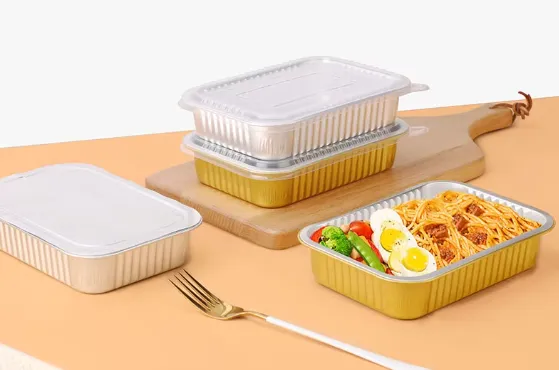
1. US Section 301 Tariffs on Chinese Aluminum Foil
If you import aluminum foil containers from China, you’ve felt the sting of Section 301 tariffs. Imposed initially in 2018, these tariffs add 25% to the cost of Chinese-made aluminum foil products entering the US. That includes everything from our 8011 alloy round trays to custom-printed baking cups. The tariff applies to the declared value of the goods, not the weight or piece count. For a standard 500ml rectangular tray, that could mean an extra $0.02–0.04 per piece depending on volume. Some buyers try to mitigate this by sourcing from other countries like Thailand or India, but those regions often lack the production scale—our factory alone runs 12 lines and pushes 800M+ pieces annually. The US Trade Representative (USTR) has granted exclusions for certain products, but they are narrow and require annual renewal. Our advice: check the HTS codes for your specific items. Many food containers fall under 7607.19.60, which is still subject to the tariff. If your MOQ is above 50,000 pieces, we can help you classify correctly and even explore bonded warehousing options to defer duty payments.
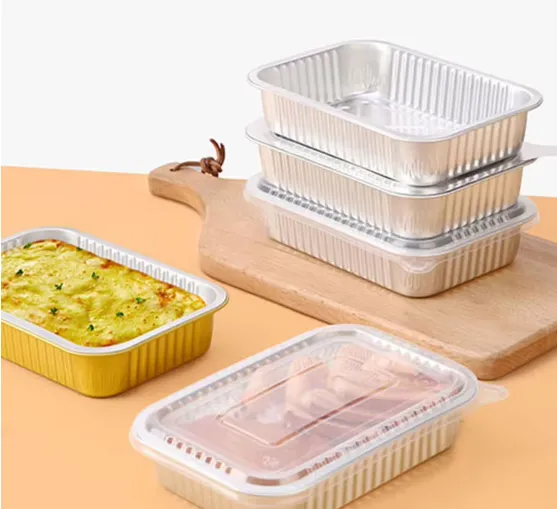
2. EU Anti-Dumping Duties on Chinese Aluminum
The European union has its own protectionist measures. In 2021, the EU imposed anti-dumping duties on certain aluminum foil products from China, including those used for food containers. The duty rate varies by producer—from 8% to over 30%. For importers buying from our factory, the rate is on the lower end because we cooperate fully with the EU investigation and provide audited cost data. But here’s the kicker: the duties apply to aluminum foil in rolls, not necessarily to finished containers. So if you import our pre-formed baking cups or airline meal trays, you might avoid the duty entirely. The EU regulation (EU) 2021/1784 defines the product scope as 'aluminum foil of a thickness of less than 0.021 mm, in rolls, whether or not backed.' Our container stock is typically 0.05–0.10 mm thick, so finished containers are outside scope. But if you buy our jumbo rolls for in-house conversion, the duty applies. We recommend working with a customs broker who understands the distinction. A wrong classification could cost you thousands.
3. UK Plastic Packaging Tax and the Shift to Aluminum
Since April 2022, the UK levies a £210.82 per tonne tax on plastic packaging that contains less than 30% recycled content. This has driven many food businesses to switch to aluminum containers. Unlike plastic, aluminum is infinitely recyclable and our 8011 alloy contains up to 50% post-consumer recycled content. The tax applies to plastic packaging components—so if you sell a meal kit with a plastic lid, that lid is taxed. Our containers with aluminum foil lids avoid the tax entirely. For a typical 500ml tray used in takeaway, switching from a plastic container to our aluminum alternative saves about £0.006 per unit in tax. At 1 million units annually, that’s £6,000 saved. Plus, aluminum commands a premium in the recycling market—some UK councils now collect clean aluminum foil containers curbside. We’ve seen a 15% increase in UK orders since the tax took effect. If you’re evaluating materials, run the numbers including disposal costs. Aluminum often wins.
4. US-Mexico-Canada Agreement (USMCA) Rules of Origin
For importers in North America, the USMCA offers duty-free access for aluminum containers made from North American aluminum. But the rules are strict: the aluminum must be smelted and cast in the US, Mexico, or Canada. Most Chinese aluminum, including our 8011 and 3003 alloys, doesn’t qualify. That means if you import our containers, you pay the standard MFN duty rate of 2.5% (plus any Section 301 tariffs). However, if you set up a secondary operation in Mexico—say, forming trays from US-sourced aluminum—you can claim USMCA preference. We’ve worked with clients who ship our rolls (which are not subject to USMCA) to their Mexican plant, then form containers and export duty-free to the US. The key is the 'substantial transformation' requirement: the forming process must change the tariff classification. Our rolls are 7607.11.90; formed containers are 7615.19.10. That works. But you need a certificate of origin and must maintain records. We can supply our rolls with a mill certificate showing the aluminum is not of USMCA origin, which helps you document the foreign content.
5. EU Single-Use Plastics Directive (SUP) and Container Mandates
The EU’s SUP Directive (2019/904) bans certain single-use plastic items like cutlery and plates, but it also mandates that beverage containers up to 3 liters must have caps attached to the bottle. For food containers, there’s no direct ban, but member states are implementing extended producer responsibility (EPR) fees that penalize non-recyclable packaging. Aluminum containers are exempt from most EPR fees because they are infinitely recyclable and have high scrap value. In Germany, for example, the fee for plastic packaging is €0.05–0.20 per kg, while aluminum is €0.01–0.03. For a company using 10 tonnes of packaging annually, that’s a saving of €400–1,700. Additionally, some countries like France require that all food containers be recyclable by 2025. Our aluminum containers meet that requirement. If you export to the EU, ensure your containers are marked with the proper recycling symbol (ALU 41). We can print that on your custom lids or emboss it on the tray base. It’s a small detail that prevents fines at customs.
Table: Tariff and Duty Comparison for Key Markets
| Market | Duty on Finished Containers (Chinese origin) | Duty on Aluminum Rolls (Chinese origin) | Key Regulation |
|---|---|---|---|
| USA | 2.5% MFN + 25% Section 301 | 2.5% MFN + 25% Section 301 | Section 301, USMCA |
| EU | 0% (if<0.021mm thickness, see anti-dumping) | 8–30% anti-dumping (depending on producer) | EU 2021/1784, SUP Directive |
| UK | 0% (no anti-dumping on containers) | 0% (but plastic tax applies to plastic alternatives) | Plastic Packaging Tax |
| Canada | 2.5% MFN (no Section 301) | 2.5% MFN | CUSMA (similar to USMCA) |
6. How to Navigate These Shifts as an Importer
First, know your product’s exact HTS code. A small difference—like whether your item is a 'tableware' or 'kitchen article'—can change the duty rate. Second, consider dual-sourcing. If US tariffs are too high, explore our factory’s ability to supply from other locations? We only manufacture in China, but we can help you find a distributor in a third country. Third, use free trade agreements (FTAs). For example, if you are in Chile, the FTA with China eliminates duties on aluminum containers. Fourth, invest in compliance. The EU’s new Carbon Border Adjustment Mechanism (CBAM) will eventually cover aluminum. We are ISO 14001 and ISO 50001 certified, which helps prove our energy efficiency. Keep records of our certifications—they may reduce your CBAM obligations. Lastly, talk to us early. We’ve seen importers lose thousands because they didn’t check duty changes before placing a large order. We track these policies weekly and can advise on optimal shipping ports and customs procedures.
7. Frequently Asked Questions
Do US Section 301 tariffs apply to aluminum foil containers with lids?
Yes, if the container is made in China and the HTS code is covered. Most aluminum food containers fall under 7615.19.10, which is subject to the 25% tariff. Lids, if imported separately, may have a different classification (e.g., 7615.10.71 for caps). Check with your customs broker. We can provide a classification memo for our products.
Can I avoid EU anti-dumping duties by importing finished containers instead of rolls?
In many cases, yes. The anti-dumping duties apply to aluminum foil in rolls of thickness<0.021mm. Our finished containers are thicker (0.05–0.10mm) and are classified as tableware, not foil. However, if the container is made from foil that thin, it could still be caught. We recommend using our standard 0.06mm or thicker stock for EU-bound orders.
What certifications do I need to prove my aluminum containers are recyclable in the EU?
No specific certification is required, but you should have a declaration from the manufacturer (us) stating the material composition and that it is free from contaminants. Our aluminum is 100% recyclable and meets the EU’s recyclability criteria. We can provide a letter with our ISO 9001 and environmental certifications.
Looking for aluminum foil containers?
We supply food-grade aluminum foil containers for airlines, restaurants and food processors worldwide. Get a free quote today.
Get Free Quote → Browse Products