8011 vs 3003 Aluminum Alloy for Food Containers
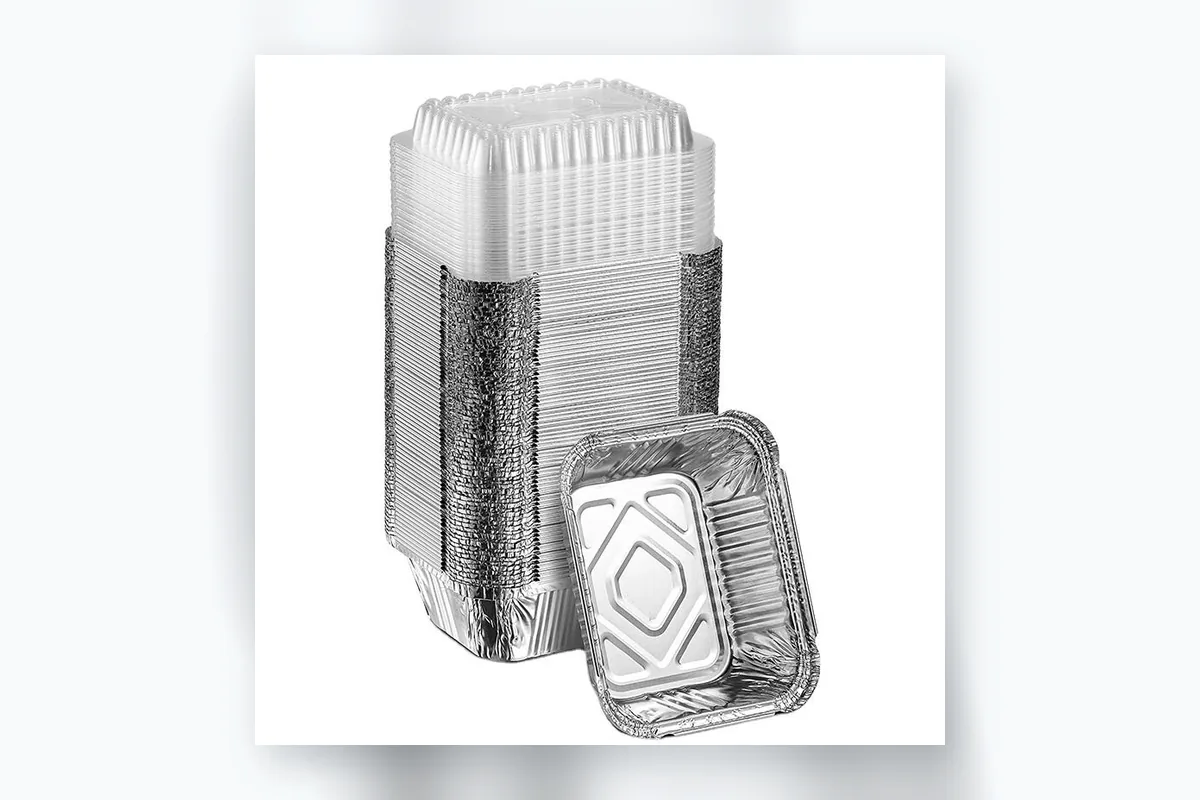
When packaging engineers and procurement teams specify aluminum for foil food containers, the conversation almost always narrows to two candidates: 8011 and 3003. Both are widely used in food-container applications when the final material, surface treatment, manufacturing controls, and documentation suit the intended food contact. Yet buyers frequently treat the alloy number as if it were a complete performance guarantee. It is not. The alloy designation describes chemistry; the delivered product's behavior on your forming line and in your customers' ovens depends just as much on temper, gauge, surface condition, and the discipline of the mill that produced it. This guide compares 8011 and 3003 objectively so you can match the right material to the right application—and know which questions to ask your supplier.
Alloy Designation Is a Starting Point, Not a Specification
Under the Aluminum Association four-digit system (the basis for EN 573-3 and ISO 209 designations), the first digit identifies the principal alloying element. The 8xxx series covers alloys with "other elements"—for foil this is primarily an aluminum-iron-silicon system, of which 8011 is the workhorse. The 3xxx series is aluminum-manganese, with 3003 as its most common member. These families were developed for different reasons, and the number tells you the chemical intent, not the finished mechanical properties.
What actually reaches your dies is defined by the full callout: alloy plus temper plus dimensional and surface tolerances. An 8011-O foil and an 8011-H24 strip share a chemistry but behave very differently. That distinction is the single most common source of misordered material, so it deserves its own discussion before any head-to-head comparison. Explore the full range of formats this affects across our aluminum foil container products.
8011 vs 3003: Composition and Metallurgy
The performance gap between these alloys traces back to their alloying elements. In 8011, iron and silicon form fine intermetallic particles (such as Al-Fe-Si phases) that refine grain structure and give excellent rollability down to very thin gauges. This makes 8011 the dominant choice for lightweight, high-volume foil containers where formability and surface quality matter most.
In 3003, manganese (typically around 1.0–1.5%) delivers solid-solution and dispersoid strengthening. The result is a modestly stronger, stiffer material that resists denting and holds its shape under load—useful for deeper draws, heavier steam-table pans, and containers that must be stacked or handled aggressively.
| Characteristic | 8011 (Al-Fe-Si) | 3003 (Al-Mn) |
|---|---|---|
| Alloy family | 8xxx, "other elements" | 3xxx, aluminum-manganese |
| Principal additions | Iron, silicon | Manganese (~1.0–1.5%) |
| Typical container gauge | Excellent at thin gauges (~0.03–0.20 mm) | Common at heavier gauges (~0.07 mm and up) |
| Formability / deep draw | Very good; smooth surface, tight radii | Good; benefits from correct temper for deeper draws |
| Strength & rigidity | Lower; adequate for light containers | Higher; better dent and stack resistance |
| Corrosion resistance | Good; passive oxide layer | Good to very good; manganese aids uniform corrosion behavior |
| Typical applications | Round trays, lightweight lidding, wide-format containers | Steam-table pans, deep rectangular trays, heavy-duty catering |
| Relevant standards | EN 546, EN 573-3, ASTM B209, AA Teal Sheets | EN 573-3, ASTM B209, AA Teal Sheets |
Values above are typical industry ranges for orientation only; they vary by producer, temper, and gauge, and must be confirmed against a mill certificate.
Why Temper Matters as Much as the Alloy Number
Temper describes the metallurgical condition produced by rolling and heat treatment, and it governs strength and ductility more directly than the alloy family does. For foil containers you will most often encounter:
- O (annealed): the softest, most ductile condition—ideal for complex, deep, or wrinkle-sensitive forming.
- H1x (strain-hardened): increased strength from cold work, with reduced elongation.
- H2x / H24 (strain-hardened, partially annealed): a balance of strength and formability common in container stock.
A soft-temper 3003 can out-form a hard-temper 8011, and vice versa. This is precisely why "just send me 8011" or "just send me 3003" is an incomplete instruction. The alloy sets the ceiling for a property; the temper decides where within that range your material lands. Matching temper to your tooling is central to consistent output on both round foil containers and rectangular foil containers.
Forming and Deep-Draw Behavior
On the line, formability shows up as clean draws without splits, thinning, or wrinkling, and as stable dimensions after release. 8011's fine microstructure and smooth surface make it forgiving for high-speed forming of thin-wall containers and for tight-radius features. 3003, with its higher work-hardening capacity, tolerates deeper draws and more demanding geometries when supplied in an appropriate soft or intermediate temper.
The practical takeaway: geometry and gauge often decide the alloy. A shallow, wide round tray favors thin 8011; a deep rectangular pan that must survive transport and reheating may favor 3003. Precision tooling and controlled coil quality matter as much as chemistry—see how we manage this in our foil container manufacturing process.
Strength, Rigidity, and In-Use Durability
3003 generally offers higher tensile and yield strength than 8011 at a comparable temper, which translates into better dent resistance, edge rigidity, and stackability. For catering operations, airline service, and steam-table use—where containers are filled hot, stacked, and handled repeatedly—that added stiffness reduces deformation and product loss. Purpose-built formats such as our airline foil trays illustrate where rigidity and dimensional consistency are non-negotiable.
For lightweight retail and takeaway containers, however, the extra strength of 3003 may be unnecessary, and 8011 delivers the required performance at lower gauge and weight. Neither alloy is universally "stronger where it counts"—it depends entirely on the container's job.
Corrosion Resistance and Food Contact
Both alloys form a stable, self-repairing aluminum oxide layer that provides good general corrosion resistance and makes them suitable for food contact when produced to the right specifications. Manganese in 3003 supports uniform corrosion behavior, while 8011's clean surface performs well with lacquers and laminates. In service, corrosion outcomes are dominated less by the 8011-versus-3003 choice and more by pH extremes (very acidic or alkaline foods), salt, prolonged wet contact, and whether the foil is bare or coated.
For food-contact compliance, the governing references are regulatory and standards frameworks—for example EU Regulation (EC) No 1935/2004 and the Council of Europe guidance on metals and alloys in the EU, and FDA 21 CFR provisions in the US—rather than the alloy number itself. A compliant container requires the correct alloy, temper, surface treatment, and any coating, all verified together.
Why Supplier Validation Matters More Than the Alloy Label
Because the alloy designation is only one input, real-world reliability comes from a supplier who controls and documents the entire specification. Two coils both labeled "8011-H24" can differ in elongation, surface roughness, gauge tolerance, and cleanliness—differences that show up as scrap on your forming line even though the alloy is identical. Robust validation should include:
- Mill test certificates confirming chemistry against EN 573-3 / ASTM B209 / Aluminum Association limits.
- Mechanical property data (tensile, yield, elongation) for the specific temper delivered.
- Gauge, width, and flatness tolerances suited to your tooling.
- Food-contact documentation and, where relevant, coating/lacquer conformity.
- Batch traceability and consistent surface quality across lots.
This is why sourcing decisions should not stop at "8011 or 3003." The right partner translates your application requirements into a complete, validated specification and holds it consistently. If you are weighing the two alloys for a specific product, our team can review your geometry, throughput, and end-use before you commit—contact us to validate the specification.
Making the Right Choice
Use 8011 when thin-gauge formability, smooth surface finish, and light weight lead your requirements—typical of high-volume round and wide-format containers. Lean toward 3003 when rigidity, dent resistance, and deeper draws matter—typical of heavy-duty catering, steam-table, and transport-intensive trays. In many portfolios, both alloys coexist because they serve different jobs. The decisive factor is not which alloy wins in the abstract, but which validated specification—alloy plus temper plus tolerances plus surface—meets the demands of your specific container.
Authoritative references
Frequently Asked Questions
Is 8011 or 3003 the better aluminum alloy for food containers?
Neither is universally better. 8011 excels at thin-gauge formability and lightweight containers, while 3003 offers higher strength and rigidity for deeper, heavier-duty trays. The best choice depends on container geometry, gauge, end-use handling, and the delivered temper—so the decision should be made per application, not as a blanket rule.
Does the alloy number alone guarantee performance?
No. The alloy designation defines chemistry, but performance on your forming line and in service is governed equally by temper, gauge, flatness, surface condition, and any coating. Two coils with the same alloy and temper label can still differ, which is why documented mill certificates and supplier validation against EN 573-3, ASTM B209, and Aluminum Association limits are essential.
Are both 8011 and 3003 safe for food contact?
Yes—both are widely used for food-contact containers when produced to the correct specifications and, where required, with compliant coatings. Food-contact suitability is established through regulatory frameworks such as EU Regulation (EC) No 1935/2004 and FDA 21 CFR, together with the correct alloy, temper, and surface treatment—confirmed by supplier documentation rather than by the alloy number alone.
Looking for aluminum foil containers?
We supply food-grade aluminum foil containers for airlines, restaurants and food processors worldwide. Get a free quote today.
Get Free Quote → Browse Products