Aluminum Foil Container Size Guide: Capacity, Dimensions and Portions
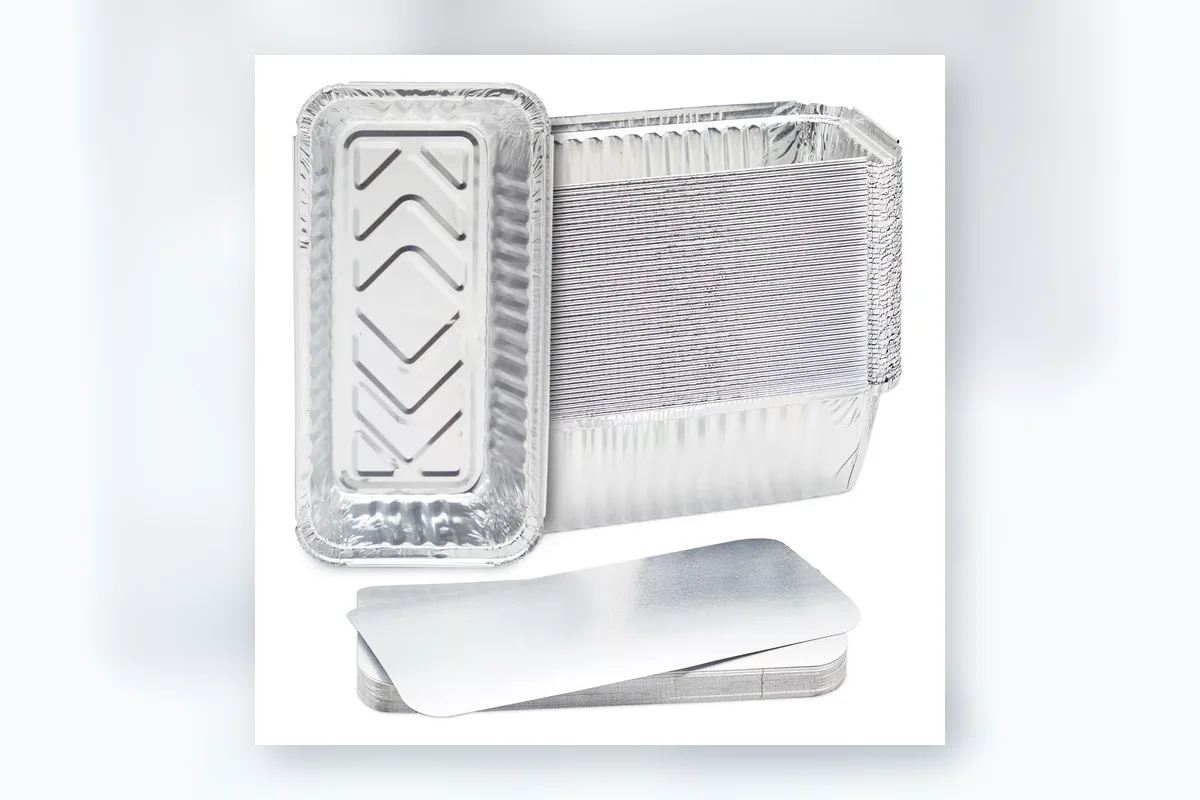
Selecting the right aluminum foil container looks simple until you compare two trays that share the same headline capacity yet behave completely differently on the line. One overflows, one looks half empty, and both create waste, complaints or re-work. For B2B buyers, caterers, central kitchens, bakeries and airline caterers, sizing is a specification exercise, not a guess. This guide explains how capacity, dimensions, depth and headspace interact, how to test containers against your real product, and how to translate all of that into reliable portion planning.
Why Foil Container Sizing Is More Than One Number
A foil container is a truncated tray: the opening at the top is wider than the base, the walls taper, and the usable volume depends on how high you can safely fill it. Because of that taper, two containers with identical top dimensions can hold very different amounts once wall angle and depth are accounted for. Treating a single "size" number as the whole story is the most common reason a container fails in production. The reliable approach is to specify several measurements together and validate them with your own product.
Nominal vs Usable Capacity
The single most important distinction is between nominal and usable capacity.
- Nominal capacity is the brim-full or theoretical volume of the tray, measured to the very top edge. It is useful for comparison and cataloguing but is rarely a safe fill level.
- Usable (working) capacity is the realistic volume you can fill while leaving room for a lid, transport, reheating and food that expands or moves. In practice, usable capacity is often 20-30% below nominal, though the exact figure depends on the product and process.
Wet, saucy or layered foods need more margin than dense, dry products. If you plan around nominal capacity, you risk spillage, lid deformation and leaks; if you plan around a tested usable capacity, you get consistent portions and clean sealing. Always base costing, portioning and shelf claims on usable capacity, not the headline number.
Reading Dimensions: Top, Base and Depth
Every foil tray should be understood through four measurements working together:
- Top (opening) dimensions - length and width, or diameter for round trays. These drive lidding, sealing, tessellation in ovens and fit inside sleeves or cartons.
- Base dimensions - always smaller than the top because of the taper. The base determines how the food sits, how evenly it heats and how stable the tray is on a shelf or trolley.
- Depth (height) - the vertical wall measurement. Depth has an outsized effect on volume and on how a product presents: a shallow, wide tray and a deep, narrow tray can share a capacity but suit very different dishes.
- Wall taper - the angle between base and top. Taper affects nesting (how tightly empty trays stack for storage and shipping) and denesting on automated lines.
When you request specifications, ask for top, base, depth and both nominal and usable capacity. A quote that lists only one dimension or one volume is incomplete for serious sourcing.
Headspace: The Margin That Protects Your Product
Headspace is the gap between the food surface and the top rim. It is where sealing, safety and presentation live. Too little headspace and lids bulge, film peels, sauces creep over the edge and stacked trays crush the contents. Too much and portions look mean and cartons waste cube. As a working starting point, allow roughly 8-15 mm of headspace for standard reheatable meals, then confirm against your own lid, sauce level and stacking method. Products that bubble, rise or release steam during reheating need more; cold, set products can use less.
Practical Size-Selection Table
Use the guide below to shortlist a format before you validate exact dimensions and capacities with samples. The capacity ranges are indicative planning bands, not fixed product codes - confirm the precise nominal and usable figures on the specification sheet for each format.
| Application | Suggested format | Indicative usable capacity band | Typical depth profile | Portioning note |
|---|---|---|---|---|
| Single side dish, dip or dessert | Small round or small rectangular | Compact (single-serve) | Shallow | One small portion; leave headspace for lids |
| Individual main meal (meat + starch + veg) | Rectangular single-compartment | Single-serve to generous single | Medium | Balance depth so no component overflows |
| Curries, stews and saucy dishes | Deeper rectangular or round with lid | Single to sharing | Deep | Increase headspace for liquids and reheating |
| In-flight and rail catering meals | Airline foil trays | Controlled single-serve | Shallow to medium | Fixed footprint for galley trolleys; tight tolerance |
| Family / sharing takeaway | Large rectangular | Multi-portion sharing | Medium to deep | Divide into visible even portions |
| Bakes, roasts and traybakes | Large rectangular / roasting tray | Bulk / multi-portion | Deep | Plan cut lines to hit target portion weight |
| Retail chilled / frozen ready meals | Rectangular with heat-seal or board lid | Single-serve, consistent | Medium | Match tray to declared net weight and lidding |
How to Test a Container Before You Commit
Specifications get you to a shortlist; testing gets you to the right container. Before scaling an order, run a simple validation with real product and real process:
- Fill test: portion your actual recipe to target weight and measure the resulting fill height and headspace. Record usable capacity as achieved, not as catalogued.
- Lid and seal test: apply your intended lid - board, foil, film or clip-on - and check it seats cleanly without bulging or gaps.
- Reheat / process test: put the filled, lidded tray through your oven, blast chiller or freezer cycle and look for spillage, warping or lid lift.
- Stack and transport test: stack loaded trays as they will ship and check the contents are not crushed and stacks stay stable.
- Denest and line test: confirm empty trays separate cleanly and run through your filling equipment at speed.
Document the results so purchasing, production and quality all work from the same validated numbers. If you need help comparing formats or requesting representative samples, the team can advise through the contact page.
Portion Planning With Confidence
Once usable capacity is confirmed by testing, portioning becomes arithmetic rather than guesswork. Work back from the customer promise: decide the target portion weight or volume, add the required headspace, and select the depth and footprint that deliver that fill consistently. For sharing and bulk formats, plan visible cut lines so each portion hits the declared weight and the tray still looks full and appealing. Keep a small buffer between your target fill and usable capacity so day-to-day variation in recipes never pushes product over the rim.
Format choice supports portion control as much as size does. Explore round foil containers for soups, curries, desserts and deli portions where an even circular fill presents well, and rectangular foil containers for meals, bakes and traybakes that need efficient cutting and shelf packing. For sealed, transport-ready meals, foil containers with lids lock in portions and reduce leaks, while airline foil trays deliver the tight, repeatable footprint that galley trolleys and inflight service demand. To compare depths, capacities and lidding across the full range in one place, browse the complete product range.
Frequently Asked Questions
What is the difference between nominal and usable capacity in a foil container?
Nominal capacity is the brim-full volume measured to the top edge, useful for comparison. Usable capacity is what you can safely fill while leaving headspace for lids, transport and reheating - typically 20-30% below nominal. Always plan portions and costs around tested usable capacity, not the nominal figure.
How much headspace should I leave in an aluminum foil tray?
A practical starting point is 8-15 mm for standard reheatable meals, then confirm with your own lid, product and stacking. Saucy or foods that rise during reheating need more headspace; cold, set products can use less. The goal is a clean lid seal with no spillage or crushing when stacked.
How do I choose between round and rectangular foil containers?
Round containers suit soups, curries, desserts and single deli portions where an even circular fill looks best. Rectangular containers suit meals, bakes and sharing dishes that need efficient cutting into portions and dense packing on shelves and in cartons. Match depth and usable capacity to your target portion, then validate with a fill and lid test.
Looking for aluminum foil containers?
We supply food-grade aluminum foil containers for airlines, restaurants and food processors worldwide. Get a free quote today.
Get Free Quote → Browse Products