How Aluminum Foil Food Containers Are Manufactured
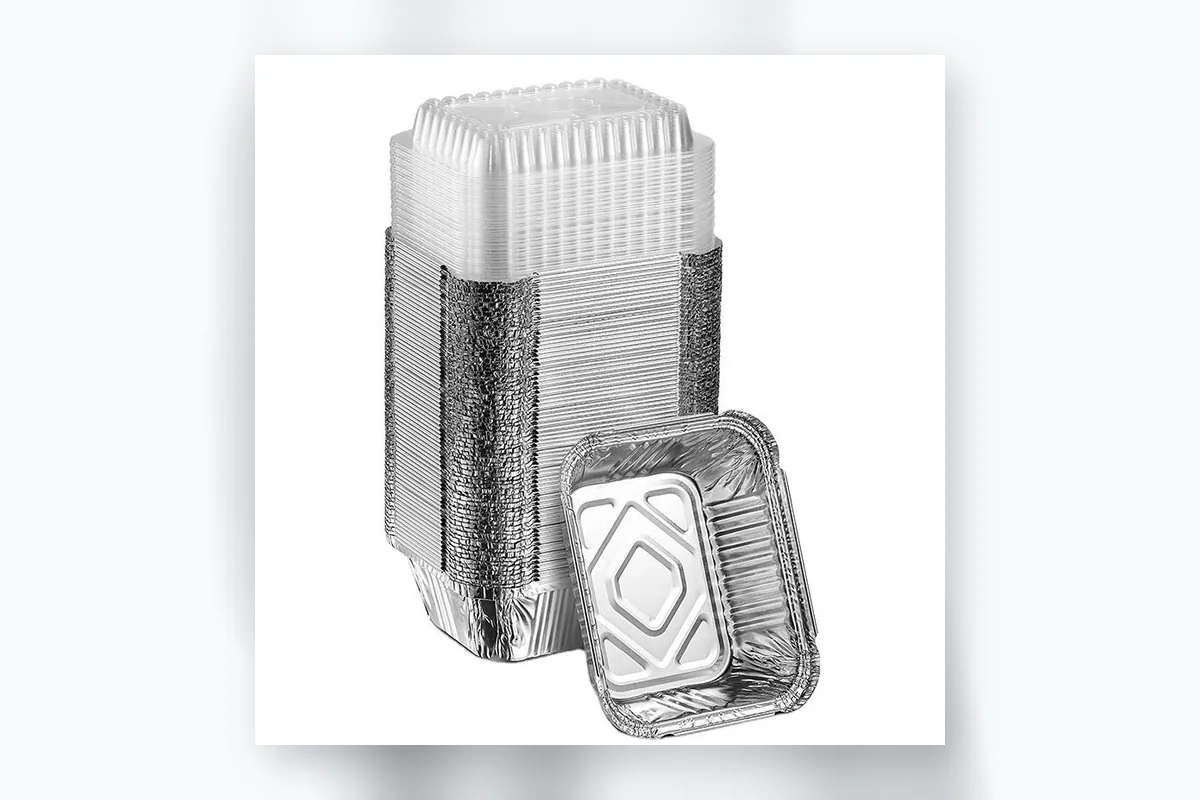
Aluminum foil food containers look simple, but each tray is the output of a tightly controlled, high-speed stamping line where alloy selection, tooling condition, and lubrication all influence dimensional accuracy, rim quality, and food-contact safety. For buyers evaluating suppliers or specifying custom trays, understanding the production sequence makes it easier to write clear technical requirements and to interpret a manufacturer's quality data. This guide walks through the full process, from incoming coil to the packed carton, and highlights the control points that separate consistent production from variable output.
Incoming Foil: Alloy, Temper, and Verification
Production begins long before the press. Most food-service trays are stamped from aluminum foil in alloys such as 8011 or 3003, chosen for their combination of formability, strength, and corrosion resistance. The foil arrives as tension-wound coils in defined thicknesses (commonly 0.03 to 0.20 mm depending on tray size and rigidity) and tempers, with a specified surface finish and, where relevant, a food-contact lacquer or coating.
Reputable manufacturers verify each incoming coil against its certificate and internal specification rather than accepting supplier documents at face value. Typical incoming checks include:
- Alloy and temper confirmation against the mill certificate.
- Thickness measurement at multiple points across the web width.
- Surface inspection for pinholes, oil residue, scratches, and edge damage.
- Width, coil weight, and core condition for feed compatibility.
- Food-contact conformity documentation for the intended application.
Aluminum used for direct food contact is expected to meet recognized food-safety requirements, and international foil bodies publish guidance on the safe use of aluminum foil in food applications. Sourcing teams can align these requirements with a supplier's documented quality system; see our manufacturing overview for how upstream material control feeds the forming line.
Lubrication and Feeding
Because forming aluminum in a die generates friction and heat, a controlled film of forming lubricant (typically a food-grade drawing oil) is applied to the foil before it enters the tooling. Correct lubrication reduces galling, protects the die surface, and improves metal flow into the cavity, which directly affects wall formation and rim quality.
Lubricant is applied at a metered rate, either by roller or spray, so that the film is even and neither starved nor excessive. Too little lubricant risks tearing and premature tool wear; too much can leave residue that interferes with downstream printing, sealing, or customer requirements. The foil is then fed into the press by a servo or mechanical feed system that indexes the web precisely between strokes. Feed accuracy determines pitch consistency and nesting quality, so feed length, pilot registration, and web tension are monitored throughout the run.
Stamping, Forming, and Rim Formation
The core of the process is a progressive or single-station stamping press fitted with a matched punch-and-die set. As the press cycles, the foil is drawn and formed into the tray cavity in one or more stages. Key variables include press speed (strokes per minute), forming depth, blank-holder pressure, and tool alignment.
Wall and Base Forming
During forming, the flat blank is shaped into the base and walls of the container. For deeper or wrinkle-wall trays, the tooling and process are tuned so that excess metal is distributed into controlled wall corrugations rather than tearing or thinning. Even material distribution keeps the base flat and the walls uniform, which matters for stacking, filling-line handling, and heat transfer during reheating.
Rim Formation and Trimming
The rim (also called the curl or flange) is formed at the edge of the tray and is one of the most important features for end users. A well-formed rim provides rigidity, a smooth safe edge, and a consistent sealing surface for lidding film or board lids. In the same operation, or immediately after, the surrounding scrap web (skeleton) is trimmed and separated so the container is cut cleanly from the strip. The trimmed aluminum skeleton is typically collected for recycling, one reason aluminum trays are valued for their recyclability.
Inspection and Quality Control
Quality control runs in parallel with production rather than only at the end. Operators and inspectors combine in-line monitoring with sampled off-line measurement to catch drift before it produces nonconforming stock. Common checks include dimensional measurement (length, width, depth, and rim width), base flatness, rim integrity, wall formation, and inspection for pinholes, cracks, and lubricant residue.
The table below summarizes representative process-control checkpoints across the line. Exact tolerances and methods are defined by each manufacturer's control plan and the customer specification.
| Process Stage | Control Parameter | Typical Method | Purpose |
|---|---|---|---|
| Incoming foil | Thickness, alloy/temper, surface | Micrometer, certificate review, visual | Confirm material meets spec |
| Lubrication | Film weight / coverage | Metered application check | Prevent tearing and tool wear |
| Feeding | Feed length, pitch, tension | Servo feedback, pilot registration | Ensure forming accuracy |
| Stamping/forming | Depth, wall formation, base flatness | Gauge, sample measurement | Dimensional conformity |
| Rim formation | Rim width, curl integrity | Visual and dimensional check | Rigidity and seal quality |
| Final inspection | Pinholes, cracks, residue | Visual, sampling plan | Reject defective trays |
Manufacturers operating a formal quality management system document these checks so results are auditable. Buyers who need evidence of systemized control can review a supplier's certificates and request the applicable control plan for their product.
Nesting, Counting, and Packing
Once trays leave the press, they are stacked (nested) into columns. Consistent forming is what allows containers to nest tightly and release cleanly on an automated filling line, so nesting behavior is itself an indicator of process stability. Poorly formed rims or walls cause trays to lock together or separate unevenly, creating downtime for the end user.
Nested stacks are counted to the specified pack quantity, either by automated counting systems or verified manual counts, then bundled and packed into cartons or shrink film. Good packing practice protects the rims and base from crushing during transit and keeps stacks aligned for easy dispensing. Packaging configurations, count-per-sleeve, and carton formats are commonly tailored to the customer, which is a routine part of OEM and ODM programs.
- Nesting quality checked for clean release and stack alignment.
- Counts verified against the agreed pack quantity.
- Rims and bases protected within the carton to prevent deformation.
- Cartons labeled with product, lot, and quantity information.
Traceability and Mold Maintenance
Two behind-the-scenes disciplines keep quality repeatable over long production runs: traceability and tooling care.
Traceability
Traceability links each finished lot back to its inputs and conditions: the foil coil and its certificate, the production line and tool set, the date and shift, and the inspection records. If a customer raises a concern, a documented chain lets the manufacturer isolate the affected lots quickly rather than quarantining unrelated stock. This lot-level record-keeping is a core expectation of food-packaging quality systems.
Mold and Tool Maintenance
The stamping die (mold) is the single biggest determinant of long-term dimensional consistency. Tools wear with every stroke, so scheduled cleaning, inspection, polishing, and controlled storage are essential. A worn or damaged die shows up as burrs, rim defects, thinning, or dimensional drift. Preventive maintenance schedules, wear tracking, and proper die storage extend tool life and protect part quality across millions of cycles. Explore how these controls translate into finished ranges on our products page, or discuss an application with our team through contact us.
Authoritative references
- aluminum.org
- European Aluminium Foil Association
- ASTM International
- Electronic Code of Federal Regulations
Frequently Asked Questions
Which aluminum alloys are used for foil food containers?
Food-service trays are most often produced from alloys such as 8011 and 3003, selected for a balance of formability, strength, and corrosion resistance. The exact alloy, temper, and thickness depend on the tray size, required rigidity, and end use, and should be confirmed against a documented specification and food-contact conformity.
How is food-contact safety ensured during manufacturing?
Safety relies on compliant food-contact material, food-grade forming lubricants, clean handling, and documented quality controls. Manufacturers verify incoming material, monitor lubricant application and residue, and maintain traceability so each lot can be linked to its inputs and inspection records.
Why is rim formation so important for foil trays?
The rim provides rigidity, a safe smooth edge, and a consistent sealing surface for lidding film or board lids. An inconsistent rim causes poor sealing, weak stacking, and nesting problems on automated lines, which is why rim width and curl integrity are dedicated inspection checkpoints.
Looking for aluminum foil containers?
We supply food-grade aluminum foil containers for airlines, restaurants and food processors worldwide. Get a free quote today.
Get Free Quote → Browse Products