Aluminum Foil Container Packing Guide: Cartons, Pallets and Container Loading
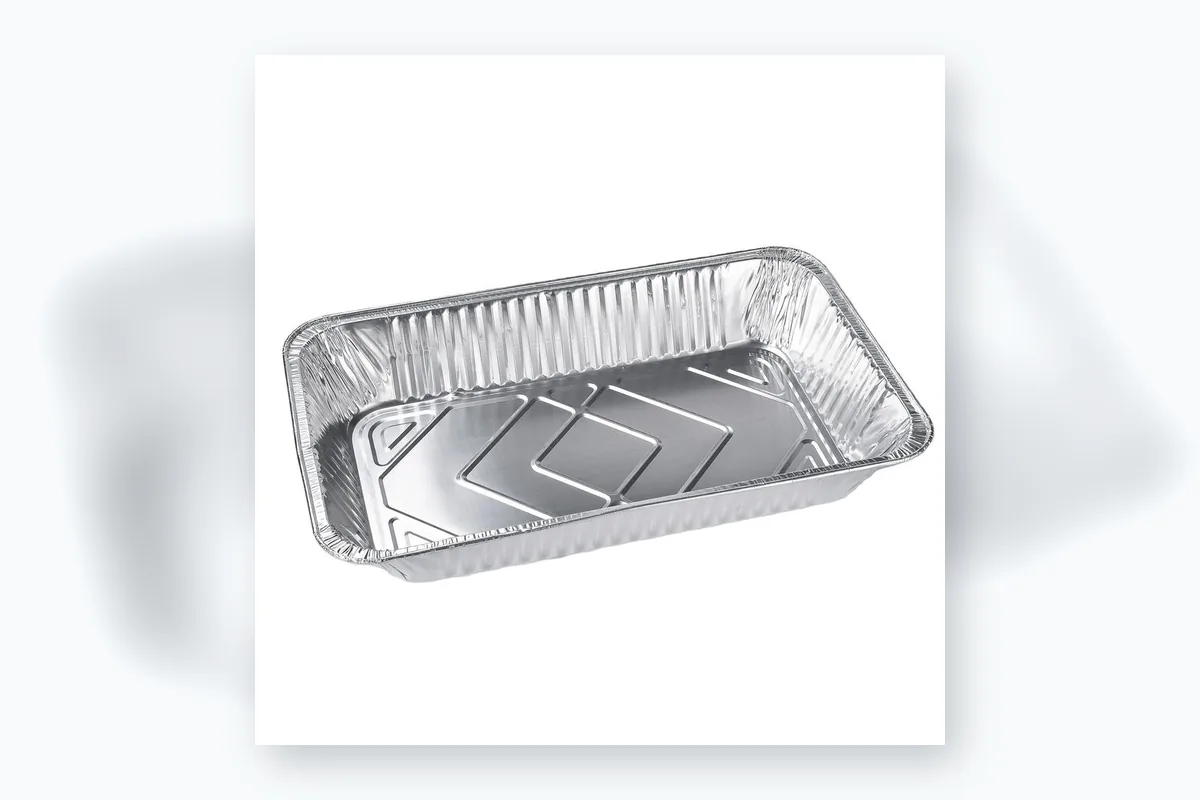
Shipping aluminum foil containers efficiently is as much a packing engineering exercise as it is a logistics one. Foil trays are light but bulky, easy to dent, and sensitive to moisture and crushing loads. How they are nested, sleeved, cartoned, and palletized determines whether a container arrives fully utilized and damage-free — or half empty with deformed rims. This guide walks B2B buyers, importers, and procurement teams through the full packing hierarchy, from a single tray to a loaded 40HQ, and explains what data you need to gather before anyone can quote an accurate load plan.
Why packing design drives your landed cost
For a low-density product like foil aluminum foil containers, freight is usually charged on volume rather than weight. That means the geometry of your cartons — not their mass — is the primary cost driver. A packing layout that nests trays tightly and squares off the carton footprint can meaningfully improve how many pieces fit in a fixed cubic space. Conversely, oversized cartons, poor nesting, or wasted headspace inflate the cube and leave you paying to ship air. Before optimizing, it helps to understand each layer of the packing structure.
The packing hierarchy: from tray to carton
Nested quantity
Foil containers are designed to stack, or "nest," inside one another so the wall of one tray sits inside the next. Nesting dramatically reduces the height a stack of trays occupies compared with stacking them mouth-to-mouth. The achievable nested quantity per stack depends on tray depth, wall angle, and any stacking lugs or dimples molded into the rim. Deeper trays nest fewer pieces per centimeter of height; shallow platters nest very densely. Whether you are sourcing round foil containers or rectangular foil containers, the nested count per stack is the single most important number for calculating carton capacity, so confirm it for each specific mold.
Sleeves and poly bags
Nested stacks are typically protected before they enter a carton. Two common formats are:
- Paper or printed sleeves — a band or wrap around a fixed count of nested trays, useful for retail-ready presentation and for keeping stacks aligned.
- Poly bags — clear or printed polybags that group one or more stacks, adding a moisture barrier and keeping surfaces clean during handling.
The sleeve or bag count sets the intermediate "inner pack" quantity, which in turn determines how the master carton is filled. Retail programs often require a specific inner count and barcode placement, so specify these early.
Carton dimensions and counts
The master carton is where cube efficiency is won or lost. Key variables include the internal carton dimensions, how many nested stacks fit per carton, and how the stacks are oriented. A carton sized to an exact multiple of the stack footprint wastes no internal void; a poorly matched box leaves gaps that both weaken the carton and waste volume. Because different products — for example, foil containers with lids that include board or dome lids — change the effective pack height, carton counts vary widely between SKUs. Always request the exact carton internal and external dimensions rather than assuming a standard box.
Gross weight, net weight, and compression
Two weights matter on every carton spec: net weight (the product only) and gross weight (product plus sleeves, bags, and the carton itself). Net weight helps you reconcile material quantities; gross weight drives pallet planning and any weight-based freight or handling limits.
Foil cartons are light, which tempts high stacking — but foil trays offer little vertical support, so the carton bears the compression load. Consider these factors:
- Board grade — the edge crush test (ECT) or burst strength must match the intended stack height and storage duration.
- Stacking height — taller stacks and long ocean transit increase creep, so derate the safe load accordingly.
- Alignment — column stacking preserves far more strength than interlocked (brick) stacking, which sacrifices compression for stability.
Getting board grade and stack height right prevents the classic failure mode: crushed bottom-layer cartons and dented rims on arrival.
Palletization
Palletizing protects cartons, speeds handling, and stabilizes the load, at the cost of some cube (pallet wood and the gaps around a fixed pallet footprint). Decide palletized versus floor-loaded based on your warehouse handling, the destination's labor, and how much cube you can afford to trade for protection. When palletizing, plan the carton pattern to overhang as little as possible, keep column stacks where compression matters, and secure with strapping and stretch wrap. Corner boards help transfer top-load into the stack rather than into carton edges. Standard pallet footprints differ by region, so confirm which pallet the plan assumes.
Humidity and storage
Bare aluminum can oxidize and spot when exposed to moisture, and cartons lose compression strength as they absorb ambient humidity during a long sea voyage. Protect the load with poly bag barriers around stacks, desiccant where appropriate, and moisture-resistant board for humid lanes. Keep pallets off damp floors and avoid condensation cycles during transshipment. These measures preserve both product appearance and carton integrity.
Container loading: 20ft, 40ft, and 40HQ estimates
Once carton dimensions and gross weight are fixed, you can estimate container fill. Because foil containers are volumetric, ocean loads are almost always "cube out" (fill the space) long before they "weight out" (hit the payload limit). As a general planning reference, standard dry containers offer roughly these usable internal volumes:
- 20ft standard — approximately 33 CBM of internal volume.
- 40ft standard — approximately 67 CBM of internal volume.
- 40ft high cube (40HQ) — approximately 76 CBM, the extra ~30 cm of height being especially valuable for tall, light cartons.
These are industry reference volumes, not guaranteed loads. Real capacity depends on your exact carton cube, whether the goods are palletized or floor-loaded, and how cleanly the carton footprint tiles the container floor. The 40HQ often shines for foil cartons because the added height lets you stack another layer of light boxes without approaching any weight limit.
Mixed SKUs and why final plans need real carton data
Most real orders combine multiple SKUs — different sizes, some plain and some with lids, plus custom items from an OEM & ODM program. Mixed loads add complexity: cartons of different dimensions must be arranged so heavier or stronger boxes sit low, footprints tile without large voids, and the overall center of gravity stays balanced. Small differences in a single carton's dimensions ripple through the entire stacking pattern and change the total piece count per container.
This is exactly why a credible load plan cannot be produced from product names alone. It requires the actual, confirmed carton internal and external dimensions, nested quantity, inner pack format, and gross/net weight for every SKU in the order. Estimates built on assumed boxes routinely miss real capacity, and the gap only appears at the loading dock. Share your full carton data and destination requirements with our team via contact us to get a load plan matched to your specific order rather than a generic figure.
Packing and RFQ data checklist
To move from estimate to firm quotation, provide the following for each SKU. This is the exact data set our team uses to calculate cartonization and container loading.
| Parameter | What to specify | Why it matters |
|---|---|---|
| Product / SKU | Shape, size code, wall depth, with or without lid | Determines nesting behavior and pack height |
| Nested quantity | Trays per nested stack | Primary input for carton capacity |
| Inner pack | Sleeve or poly bag count and format | Sets retail-ready inner units and barcodes |
| Carton dimensions | Internal and external L × W × H | Drives cube efficiency and container fit |
| Carton count | Pieces per master carton | Links product volume to logistics units |
| Net / gross weight | Per carton, both values | Pallet planning and weight limits |
| Board grade | ECT or burst strength | Compression safety for stack height |
| Palletization | Palletized vs. floor-loaded, pallet type | Trade-off between protection and cube |
| Destination lane | Port, humidity, handling needs | Moisture protection and container choice |
Frequently asked questions
How many foil containers fit in a 40HQ?
There is no universal answer. Because foil containers cube out before they weight out, the count depends entirely on the specific carton dimensions, nested quantity, and whether the load is palletized or floor-loaded. Provide your confirmed carton specs and we will calculate a figure for your exact SKU rather than quoting a generic number.
Should I palletize or floor-load foil cartons?
It depends on the trade-off you prefer. Floor-loading maximizes cube and usually fits more cartons, while palletizing improves protection, speeds handling, and reduces damage risk at the cost of some volume. The right choice reflects your destination handling, labor, and how much cube you can trade for safety.
What causes dented rims and crushed cartons in transit?
The usual culprits are under-specified board grade for the stack height, interlocked stacking that sacrifices compression strength, moisture softening the cartons over a long voyage, and voids inside poorly matched boxes. Correct board grade, column stacking, moisture barriers, and cartons sized to the stack footprint address all four.
Looking for aluminum foil containers?
We supply food-grade aluminum foil containers for airlines, restaurants and food processors worldwide. Get a free quote today.
Get Free Quote → Browse Products