How to Reduce Denting in Foil Container Cartons
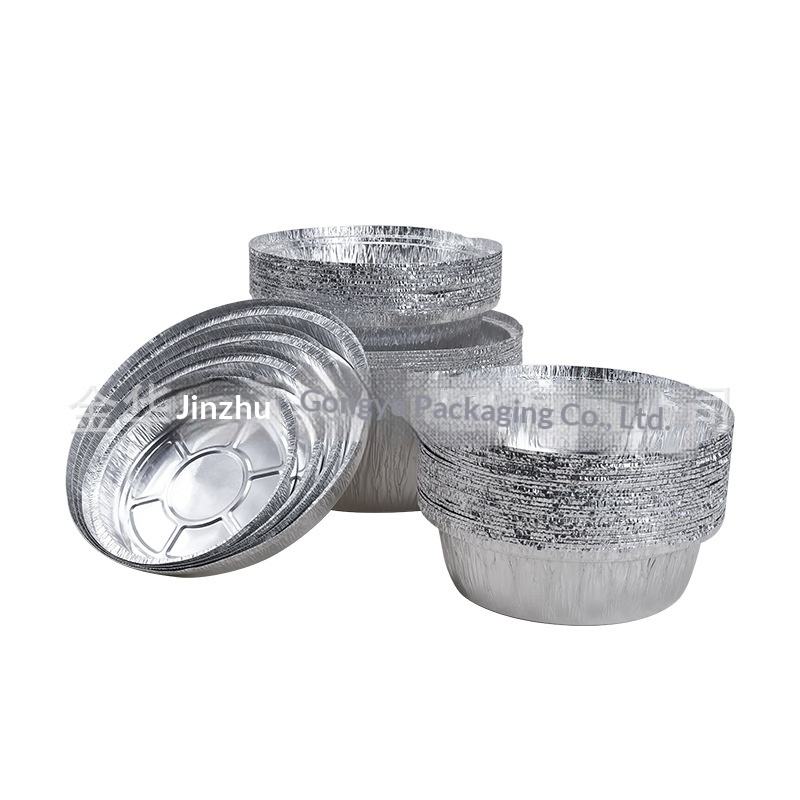
Why Your Foil Container Cartons Keep Showing Up Dented
You've just received a 40-foot container of 8-inch round foil trays. The cartons look fine from the outside. But when your warehouse team starts breaking them down, every fifth carton has a crushed corner. Inside, the foil containers are bent, wrinkled, or worse — the rims are distorted. Now you're looking at a return claim, a delayed production run, or a customer who won't pay.
Denting in foil container cartons isn't just a cosmetic issue. It compromises the structural integrity of the trays, can lead to leaks, and makes your product look unprofessional. The frustrating part? Most denting happens long before the carton reaches your dock. It starts in the factory, during palletizing, or in the way the cartons are stacked in the trailer.
At our factory in Henan, we've shipped over 800 million pieces to 50+ countries. We've seen every kind of damage — from a single crushed carton to a full pallet collapse. Here's the step-by-step process we use to reduce denting, and how you can apply it to your own packaging operation.
Step 1: Assess Your Current Carton Strength
Before you change anything, you need to know what you're working with. The most common mistake we see is buyers assuming all corrugated cartons are equal. They're not. A single-wall B-flute carton might be fine for lightweight bakery cups, but it's a disaster for heavy 500ml foil trays.
Start by checking the edge crush test (ECT) rating. For foil containers, you want at least 32 ECT for small trays (up to 4 inches), and 44 ECT or higher for larger rectangular trays. If your cartons are below that, denting is inevitable.
Also check the flute profile. B-flute (3mm) is common but offers less cushioning than C-flute (4mm) or BC-flute (7mm). For fragile foil edges, we recommend BC-flute for cartons over 10 inches in length. It adds about 15% to the carton cost, but it cuts denting by half in our experience.
One thing to keep in mind: the carton's compression strength matters more than its thickness. A 32 ECT carton with a tight fit will outperform a 44 ECT carton with loose packing. The foil containers need to fill the carton completely, with no room to shift.
Step 2: Optimize the Internal Packing Layout
How you arrange the foil containers inside the carton is just as important as the carton itself. We've tested dozens of layouts, and here's what works:
Stack vertically, not horizontally. Foil trays are strongest when pressure is applied to the rim, not the sidewall. Stack them so the rims align vertically.
Use a layer pad between every 5-6 layers. A simple corrugated sheet distributes weight and prevents the bottom layers from collapsing.
Leave no empty space. If there's a gap, the trays will slide and dent. Use filler pads or bubble wrap to fill voids.
For rectangular trays, alternate the direction. Place one tray face-up, the next face-down, to interlock the rims. This adds stability.
We once had a client who insisted on stacking 1000 baking cups in a single carton. They were using a 12x12x10 carton with no internal dividers. The result? 40% of the cups were crushed. We switched to a 12x12x12 carton with two layer pads and a 5x5 grid divider. Damage dropped to under 2%.
The key is to match the internal layout to the specific container geometry. Round trays need a honeycomb arrangement; rectangular trays need straight rows with dividers.
Step 3: Reinforce the Carton Corners and Edges
Denting almost always starts at the corners. That's where the carton takes the most impact during handling and stacking. A standard carton has a single-thickness corner, which is weak. We reinforce ours with corner boards — L-shaped cardboard or plastic protectors that fit over the vertical edges.
Corner boards cost about $0.02 per carton. They're worth every penny. In our tests, adding corner boards reduced edge damage by 60% in simulated drop tests.
Another trick: use a double-wall carton for the bottom two layers of each pallet. The bottom layers bear the most weight. We've seen pallets with 10 layers of cartons where the bottom layer was crushed just from the weight above. By using a heavier carton for the bottom two layers, you protect the entire pallet.
If you're shipping internationally, consider adding a moisture-resistant coating to the cartons. Humidity weakens corrugated board by up to 30%. A simple wax or polymer coating keeps the carton rigid during ocean transit.
Step 4: Improve Palletizing and Stretch Wrapping
You can have the strongest cartons in the world, but if you stack them poorly on a pallet, they'll dent. The first rule: make sure the pallet is larger than the cartons. If the cartons overhang the pallet edges, they'll get crushed by forklift tines or shrink wrap tension.
We use a 1200x1000mm pallet for our standard cartons. That gives a 50mm overhang on each side, which is safe. For larger cartons, we move to a 1200x1200mm pallet.
When stacking, interlock the cartons in a brick pattern, not column stack. Column stacking (all cartons aligned) transfers weight straight down, but it's less stable. Interlocking spreads the load and prevents the stack from tipping.
Stretch wrapping is where most factories go wrong. They either use too little film, leaving the pallet loose, or too much, crushing the cartons. The right tension is enough to hold the load without indenting the cartons. We use a 20-micron film, applied with a 50% overlap. This gives a tight, stable pallet without compressing the cartons.
Also, add a top cap — a flat corrugated sheet on top of the pallet. It distributes pressure and prevents the strap or film from digging into the top layer.
Step 5: Control the Loading and Unloading Process
Even with perfect packaging, careless handling can dent cartons. The most common cause is forklift operators who push the pallet too hard against the trailer wall. We train our warehouse staff to use a 5cm clearance when loading. That means the pallet is placed with a 5cm gap from the wall, so the cartons don't absorb impact.
Another issue is throwing cartons. We've seen workers toss cartons onto a pile from three feet away. That's a guaranteed dent. We use a conveyor system for all cartons over 5kg, and we mandate two-person lifts for anything over 15kg.
If you're shipping less-than-truckload (LTL), the risk increases. Your pallets will be handled multiple times. To mitigate this, we use a slip sheet on the bottom of each pallet. It makes it easier to slide the pallet without damaging the bottom cartons.
Step 6: Test Your Packaging with a Drop Test
You can't improve what you don't measure. We run drop tests on every new packaging design. The standard is ISTA 1A, which involves a 36-inch drop onto concrete. We also do a compression test to see how much weight the carton can hold before denting the foil inside.
Here's a comparison of typical results for different carton types:
| Carton Type | ECT Rating | Drop Test (36 in) | Denting Rate |
|---|---|---|---|
| Single-wall B-flute | 32 ECT | Fails | 25% |
| Single-wall C-flute | 32 ECT | Passes with corner damage | 10% |
| Double-wall BC-flute | 44 ECT | Passes | 2% |
We recommend running at least three drop tests on different samples. If any carton fails, go back to steps 1-3 and adjust. It's better to catch problems in the factory than in your customer's warehouse.
Step 7: Work with a Supplier Who Understands Packing
Here's the contrarian take: the carton is not your supplier's problem. It's yours. But a good foil container manufacturer will help you design the right packaging. At our factory, we don't just make foil trays — we test them in various carton configurations to ensure they arrive dent-free.
When you're sourcing foil containers, ask the supplier about their packaging process. Do they use corner boards? Do they have a drop test protocol? Do they offer custom carton sizes? If they look at you blankly, that's a red flag.
We provide free samples to qualified buyers, and we include a packaging recommendation with every quote. We've been doing this since 2007, and we've learned that a dented carton costs more than the foil container itself — it costs you time, trust, and potential business.
Frequently Asked Questions
What is the best carton material for foil containers?
For most foil containers, a double-wall corrugated carton with a 44 ECT rating is ideal. It provides enough strength to withstand stacking and handling without adding excessive weight or cost. For very small trays, a single-wall C-flute with 32 ECT may suffice.
How can I test if my cartons will dent?
Run a simple compression test: stack the cartons to the height you'll use in shipping, then apply pressure with a compression tester. If the carton deforms more than 10mm, you'll likely see denting. Also do a drop test from 36 inches onto a hard surface.
Does the foil container shape affect denting?
Yes. Round containers are more resistant to denting because the curved walls distribute stress. Rectangular containers have flat sides that are more prone to bending. For rectangular trays, use dividers and layer pads to support the flat areas.
Looking for aluminum foil containers?
We supply food-grade aluminum foil containers for airlines, restaurants and food processors worldwide. Get a free quote today.
Get Free Quote → Browse Products